Travel Planning

Best Time to Visit the Golden Triangle (Delhi, Agra, Jaipur): Month-by-Month Weather, Crowds & Festivals

Author

Dream Taj India Travel Specialist

North India & Rajasthan • 08 Oct 2026 • 8 min read
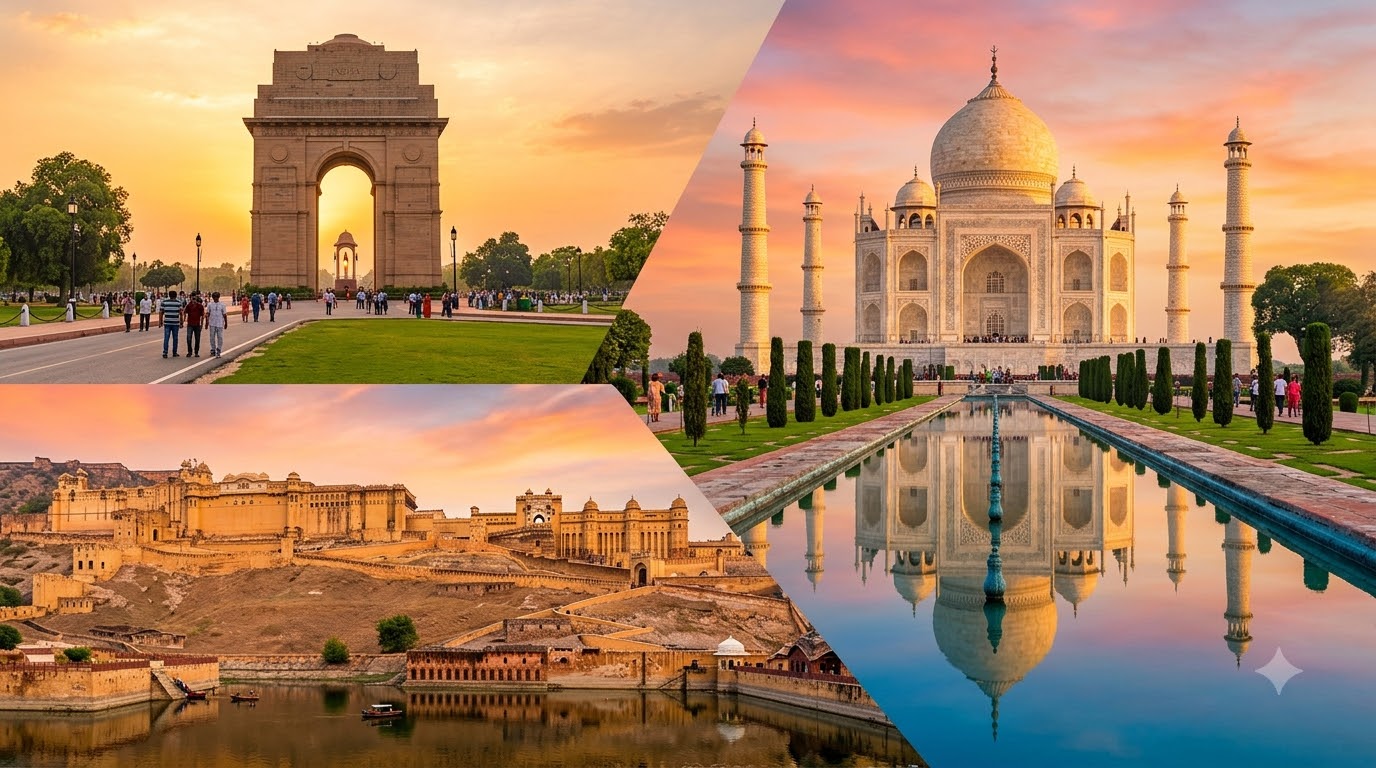
Best Time to Visit the Golden Triangle (Delhi, Agra, Jaipur): Month-by-Month Weather, Crowds & Festivals
Key Takeaways • Quick Travel Advice

Detailed month-by-month analysis of North India weather, winter fog strategies, festival seasons (Holi & Diwali), and shoulder season discounts across Delhi, Agra, and Jaipur.

Choosing the right season for your Golden Triangle tour can make the difference between a brisk, glorious heritage holiday and battling humid heatwaves or delayed winter fog. Here is our native destination specialists’ complete seasonal breakdown.

1. October to March: The Golden Peak Season (Best Overall)

This is universally regarded as the absolute finest window for exploring Delhi, Agra, and Jaipur:

Weather: Daytime temperatures hover comfortably between 18°C and 28°C with crisp blue skies and low humidity. Evenings can be brisk (10°C–14°C), perfect for heritage courtyard dinners.
Monument Exploration: Walking around vast open-air complexes like Amer Fort, Fatehpur Sikri, and Humayun’s Tomb is effortless and fatigue-free.
Festivals: Experience iconic celebrations like Diwali (Festival of Lights in Oct/Nov) with illuminated bazaars and Holi (Festival of Colors in March) across Jaipur and Mathura-Vrindavan.

2. December to January: Winter Magic & Fog Management

Mid-winter brings chilly temperatures (5°C–8°C early mornings) and morning fog across the Indo-Gangetic plains:

Fog Strategy for Taj Mahal: On foggy December/January mornings, early sunrise visibility can be obscured. We recommend doing a mid-morning tour (09:30 AM–11:00 AM) or scheduling an afternoon return to Mehtab Bagh for crystal-clear golden hour views.
Expressways Over Trains: Trains like Gatimaan Express frequently suffer fog delays in January. Travelling in a dedicated private AC car with a local chauffeur via the Yamuna and Delhi-Mumbai expressways ensures guaranteed departure and arrival times.

3. April to June: Value Season (Budget & Photography Travelers)

Summer brings high daytime temperatures (35°C–42°C), but offers distinct advantages for smart travelers:

40% to 50% Lower Rates: Luxury 5-star palace hotels in Jaipur and Agra offer deep off-season discounts.
Zero Monument Crowds: Monuments are practically empty in the early morning hours between 06:00 AM and 09:00 AM, allowing incredible crowd-free photography.
Private AC Chauffeurs: All our vehicles feature high-output climate control with complimentary chilled bottled water and fresh towels.

4. July to September: The Romantic Monsoon Circuit

The monsoon rains transform Rajasthan’s arid hills into vibrant lush green valleys:

Jaipur in Monsoon: The Aravalli hills surrounding Amer Fort, Jaigarh, and Nahargarh turn dramatically emerald green with mist floating over the lakes.
Dramatic Taj Mahal Skies: Thunderstorm cloud silhouettes contrasting against the glistening rain-washed white marble of the Taj Mahal produce breathtaking photography.

Ready to Experience North India & Rajasthan?

Let our travel specialists organize a tailor-made private itinerary with verified chauffeurs, vetted heritage hotels, and licensed monument guides.